
What is liquid biopsy?
Jennifer Dunaway
https://www.flickr.com/photos/satiata/2284962380/in/faves-65845666@N05/
Licensed under CC license.
Liquid biopsy has been making front page news for some time now. So what is it and should you as a patient consider it as an option when offered one?
Biopsies have been around for a long time, it is believed to have been first performed around X/XI century. In a more recent history it has been been performed by a doctor to obtain a piece of tissue or cells from a patient. Such samples are then examined most frequently microscopically to determine presence and extent of a disease. Tissue can be cut out from a patient during surgery or it could be obtained by using a needle to aspirate material from the tissue. This second method is frequently called a thin needle biopsy, but the needle is not so thin just in case you are wandering. Biopsies are inherently risky and not always possible to perform.
Most frequent use of biopsies is for diagnosing cancer or rejection of a transplant. While they allow identification of the disease stage, they are frequently performed at advanced disease stages. Scientists and doctors have been looking for ways to diagnose cancer earlier so a treatment intervention can be successful. There is invasive and non-invasive imaging, and blood-based biomarker tests. However, there is an addition to those well known and tried standard methods – a liquid biopsy.
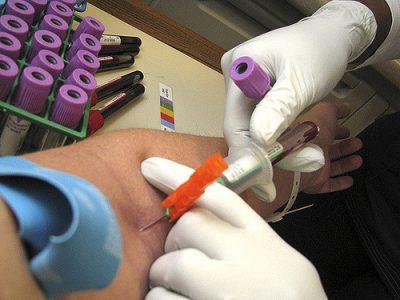
Liquid biopsy is nothing more than drawing and analyzing blood from a patient. Our blood is regularly tested for glucose, cholesterol etc. However, there is something more that can be tested in our blood and it is circulating cell free DNA (cfDNA) and/or circulating tumor cells (CTCs).
Where does this cfDNA come from? Cells in our bodies undergo constant turnover, some die, while new ones are formed. As the cells die, DNA is fragmented, and fragments wrapped around histones are found in plasma. The half life of this DNA is less than 2 hours. Healthy human plasma contains relatively little cfDNA. Cancer patients’ plasma contains not just normal DNA but also that released by tumor/s. In order to give you a visual idea of how different is working with cfDNA compare to standard genomic DNA, yield from 1 ml of whole blood gives us a range of 20 to 40 ug of DNA, in comparison an average cfDNA yield for 1 ml of plasma is in a range of 0.1 to 100 ng. This makes the yield at least 200 times lower. Due to such small amounts it is critical to stabilize samples for maximum recovery, have highly sensitive methods for isolating and analyzing cfDNA.
While presence of cell free DNA (cfDNA) in plasma has been known since 1948 (Mandel & Metais 1948), it took nearly half a century before there was enough convincing data showing that there was more cfDNA in plasma of cancer patients (Leon et al 1977, Stroun et al 1989, Vasioukhin et al 1994, Sorensonet al 1994). However, it took some more technological progress before we could have start to take advantage of this phenomenon for cancer medicine (Deng and Nakamura 2017). The critical aspects being:
- ability to isolate cfDNA
- ability to have methods sensitive enough to detect and characterize very small amounts of DNA
How can liquid biopsy help us in cancer diagnostic and treatment?
Analysis of cfDNA is capable of early detection of cancer by testing for oncogenic mutations. However, our ability to efficiently do that is still limited mostly because we can only detect mutations we know are associated with tumors. Much more important is our ability to use liquid biopsy to follow efficiency of treatment in real time, detect a relapse and estimate metastasis risk. This gives us ability to modify treatment if possible before relapse and/or metastasis is detectable by conventional methods. I can imagine that you are interested if this is actually available to patients or is this still some kind of SciFi story?
There are tests that are available for solid tumors, such as melanoma, breast, lung, colon, prostate cancer and more are coming up. The tests are not the same, they vary by cancers that they target, genes they test and information that is returned, so it is important to discuss details with your doctor. Just to give you some idea of what is available, here are some selected tests:
- Guardant 360 by Guadrant Health, uses 73-gene panel targeting actionable somatic alterations. It is already quite widely used in US cancer centers. The limitations to the test are that it is suitable for advanced solid tumors (breast cancer, lung cancer, melanoma). At the moment it cannot predict chemotherapy but gives the clinician information on clinically relevant mutations, which can guide treatment.
- Personal Genome Diagnostics, uses PlasmaSELECT™ 64, sequencing a targeted panel of 64 cancer genes. This assay is offered in addition to their CancerSELECT™ 125 panel applicable to paired tumor/normal or just tumor samples.
- Foundation Medicine offers FoundationACT test for solid tumors, such as Non-Small Cell Lung Cancer (NSCLC), Breast, Colon, and Prostate. This assay tests over 60 genes most commonly mutated in solid tumors.
- Trovagene, offers liquid biopsy tests with a difference, they utilize urine rather than blood and test EGFR, KRAS and BRAF mutations to provide treatment guidance.
What does all that mean to me as a patient?
Technology has dramatically developed in last few years and offers new methods for cancer testing, guiding treatments and early detection of relapse. As we have seen with various genetic testing companies offering various direct-to-consumer testing products it seems that there are also attempts to sell early cancer detection tests directly to consumers. One such attempt was CancerIntercept by Pathway Genomics. The FDA has send a warning letter similar to the one obtained by 23and me, describing test as high risk. The test is no longer on the list of available products at the moment.
I think that we would like the idea of a test that can detect cancer early or predict with high confidence our risk. Early detection is one of intense research areas. A company called GRAIL is trying to develop such early detection tests and is currently running a huge clinical test attempting to assess ability for early detection.
Currently, the best is to discuss with your doctor all available options at diagnosis, consider potential costs that can be associated with any cfDNA tests as well as potential benefits they can deliver. At the moment it is possible to detect a relapse as early as 6-9 months earlier than traditional imaging or repeated biopsy (Heitzer et al 2014, Deng and Nakamura 2017).
Any future developments and wider use of liquid biopsy might improve the ability to truly personalize the treatments. With real time monitoring of treatment ability to switch treatments will be possible to adjust for the response. The big question that this creates is how this will be handled and reimbursed by the insurance companies.
References:
Mandel P, Metais P. (1948) Les acides nucléiques du plasma sanguin chez l’homme. C R Seances Soc Biol Fil.;142:241-3.
Leon SA et al (1977) Free DNA in the Serum of Cancer Patients and the Effect of Therapy. Cancer Research.;37:646-50.
Stroun M et al (1989) Neoplastic Characteristics of the DNA Found in the Plasma of Cancer Patients. Oncology.;46:318-22.
Vasioukhin V et al (1994) Point mutations of the N-ras gene in the blood plasma DNA of patients with myelodysplastic syndrome or acute myelogenous leukaemia. British Journal of Haematology.;86:774-9.
Sorenson GD et al (1994) Soluble normal and mutated DNA sequences from single-copy genes in human blood. Cancer epidemiology, biomarkers & prevention : a publication of the American Association for Cancer Research, cosponsored by the American Society of Preventive Oncology.;3:67-71.
Deng X, Nakamura Y (2017) Cancer Precision Medicine: From Cancer Screening to Drug Selection and Personalized Immunotherapy. Trends in Pharmacological Sciences.; 38: 15-24

Leave a comment